A brand new Melbourne timber yard, 45 leads in nine weeks — and the best ad came in at $34.77.
Timber M8 is Melbourne's online timber yard — the second front door on a real yard in Pakenham. Brand new business, no reviews, no brand recall, and a Google Ads account that was losing every auction to Bunnings, Bowens and every established merchant in the city. Search only reaches people already typing "timber supplies melbourne", and on those terms a yard nobody has heard of pays a premium for a click it cannot convert. We stopped waiting for people to search, and put a published price list in front of Melbourne tradies instead.
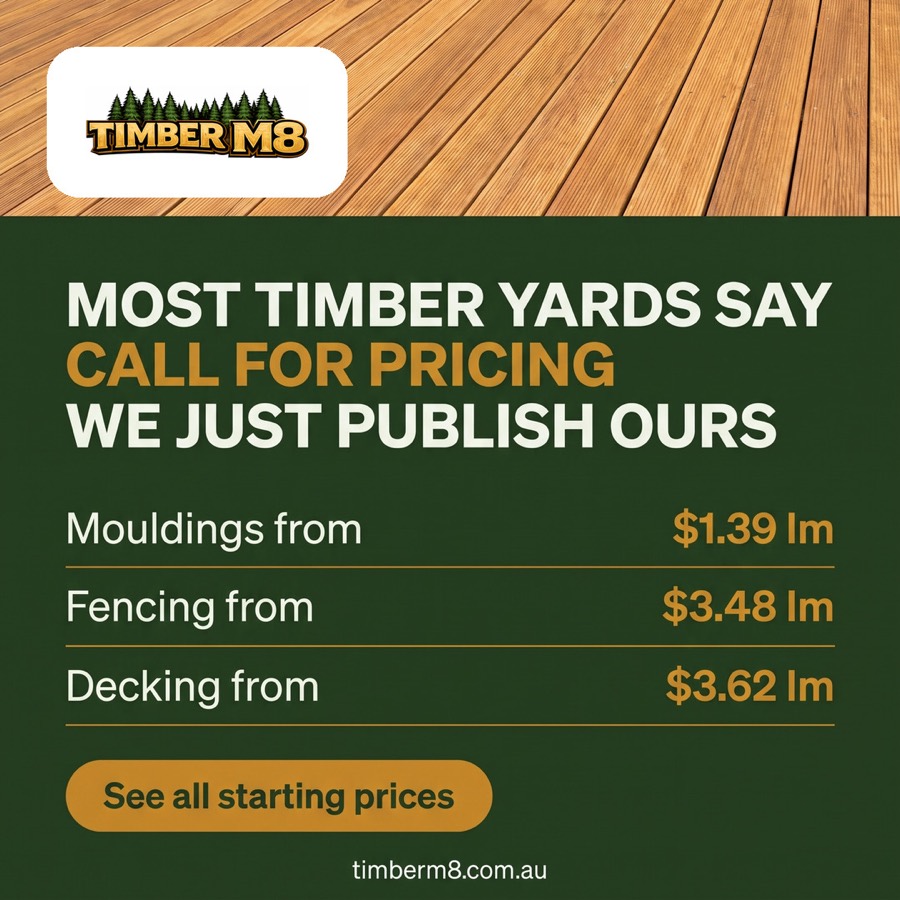
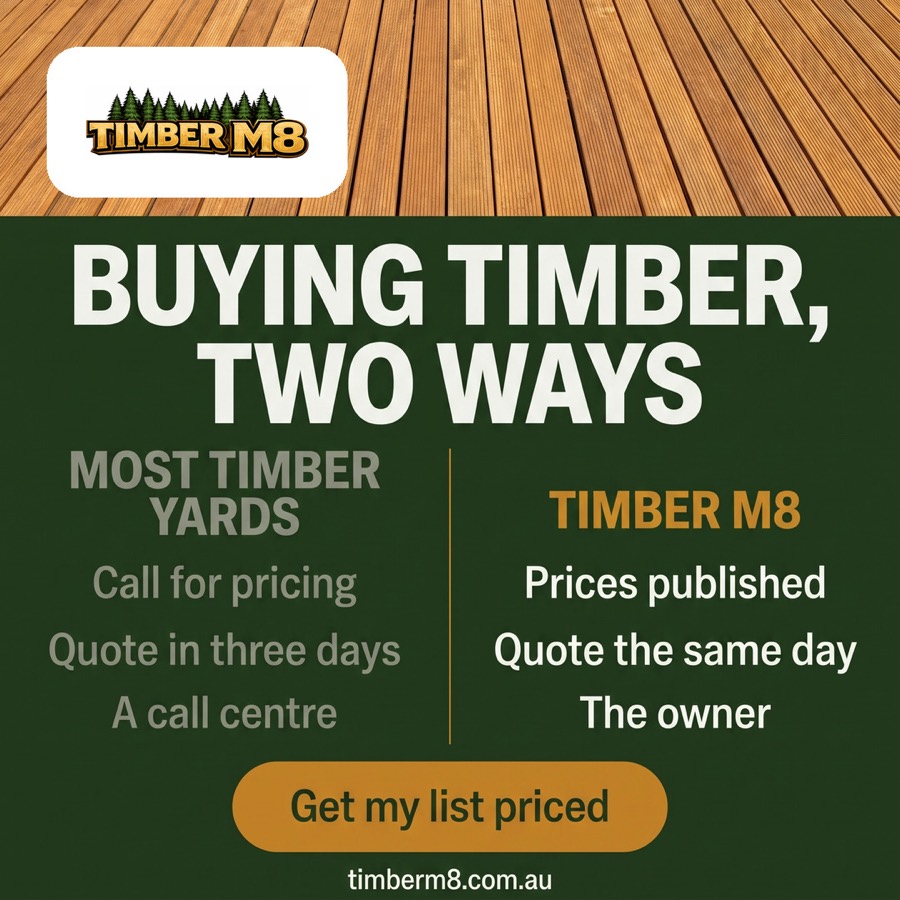
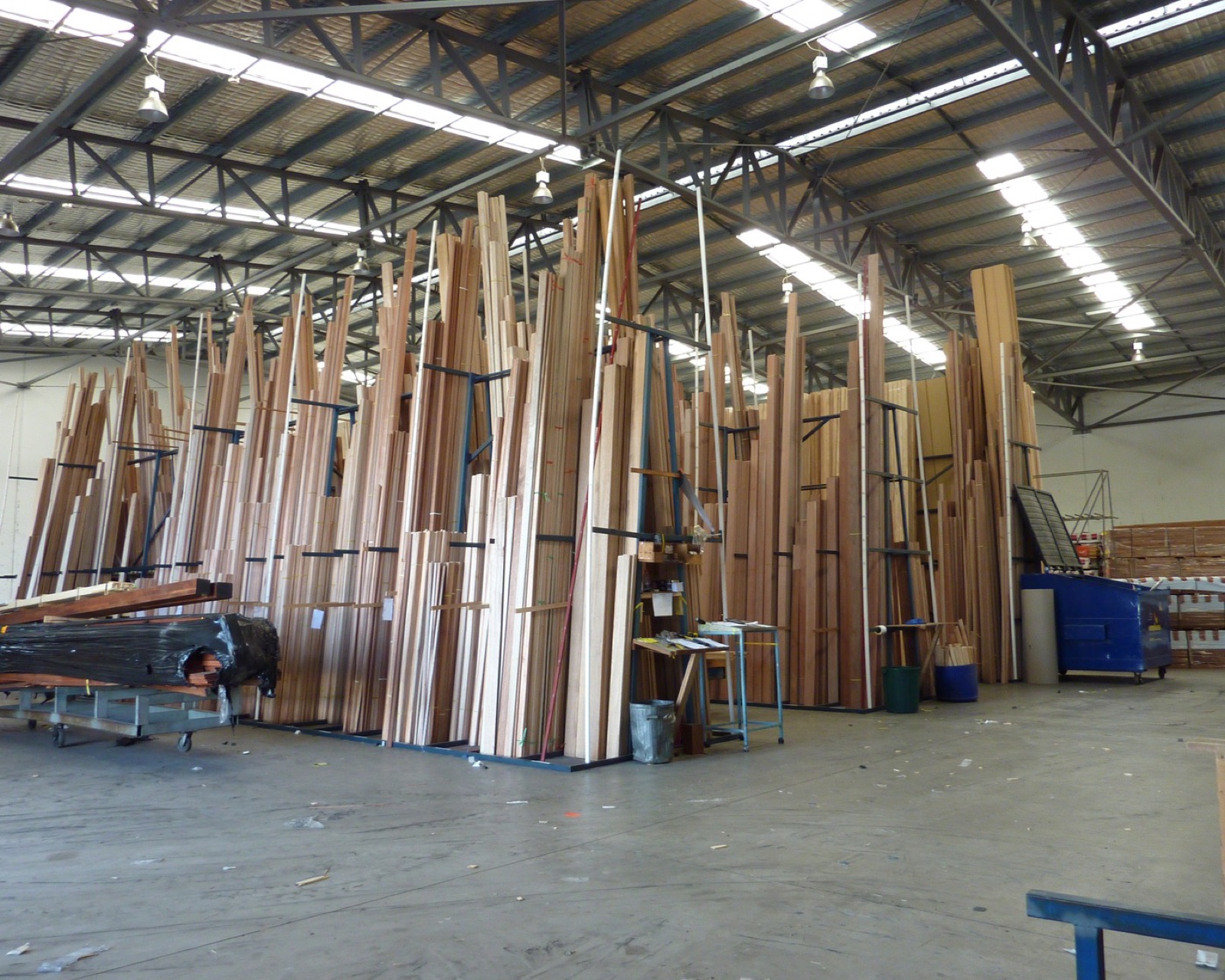
Every timber merchant in Melbourne makes you ring for a price. That is the single most annoying thing about buying timber, and it was sitting there unused as a wedge.
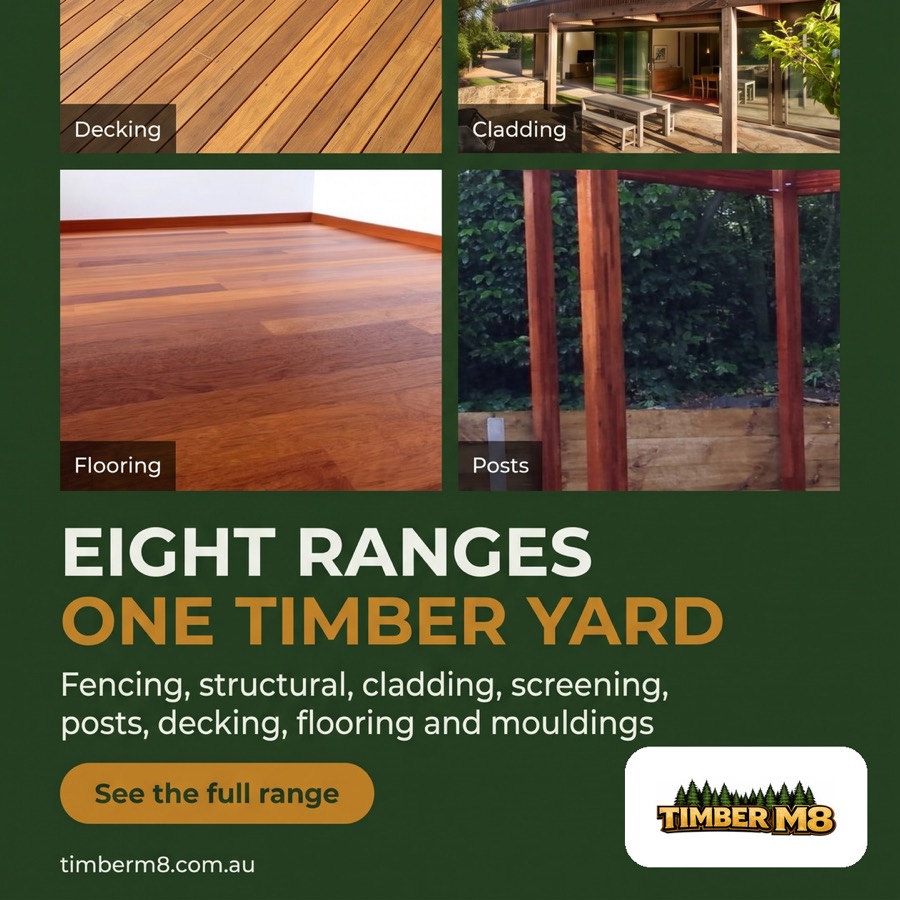
An online timber merchant selling eight ranges across Melbourne and surrounds — fencing, framing, cladding, screening, posts, decking, flooring and mouldings. Real yard, real stock, owner-operated. What it did not have was a single review or a minute of brand recall.
Google Ads was underperforming and could not be fixed by bidding harder. Search needed the brand to already have trust it had not earned yet, and there was no social proof to put on a page. Anything we ran had to earn the click on something the business could back up on day one.
Publish the prices. Build a landing page that shows every starting price in the open, wire both forms into the CRM with full channel attribution, and run Meta creative that sells the one thing no competitor will do: a same-day quote on your list, straight from the owner.
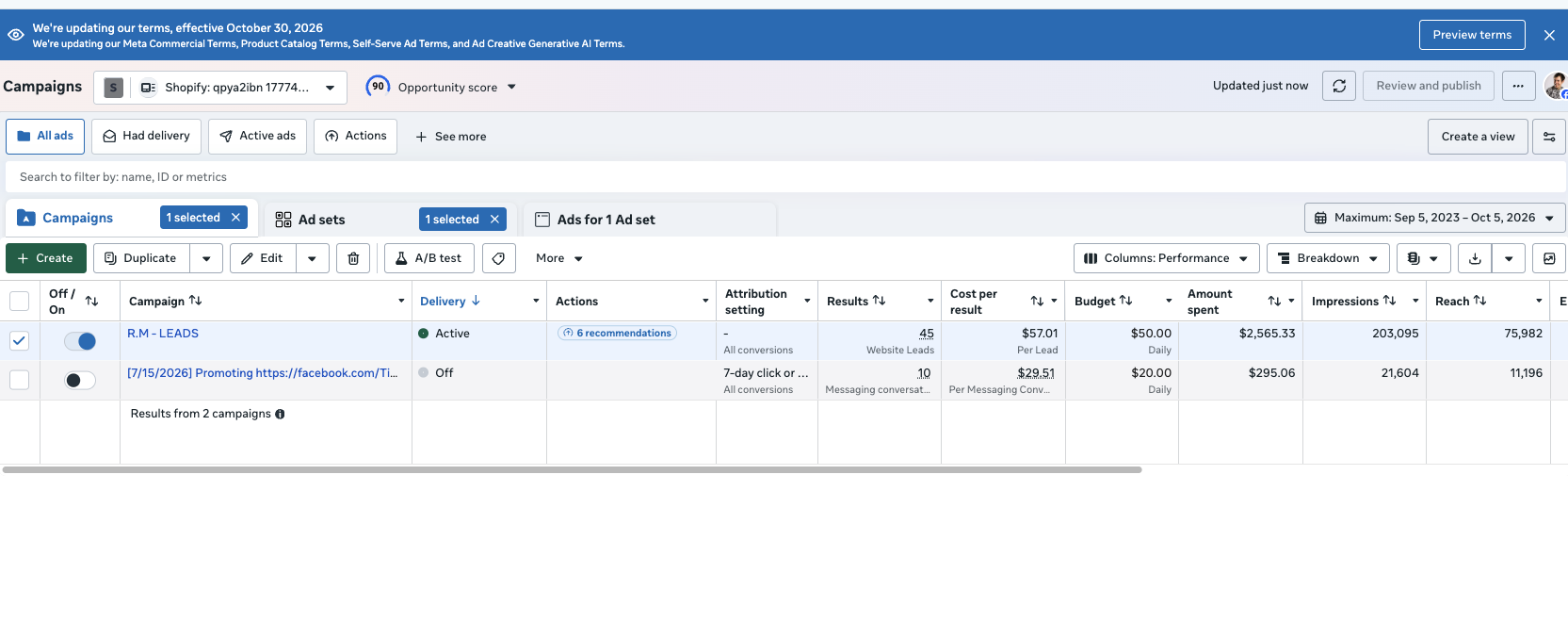
$2,565.33 ad spend across nine weeks. 203,095 impressions, 75,982 people reached, 45 leads. The best creative in the account landed at $34.77 a lead — and it was the one that named no product and showed no price.
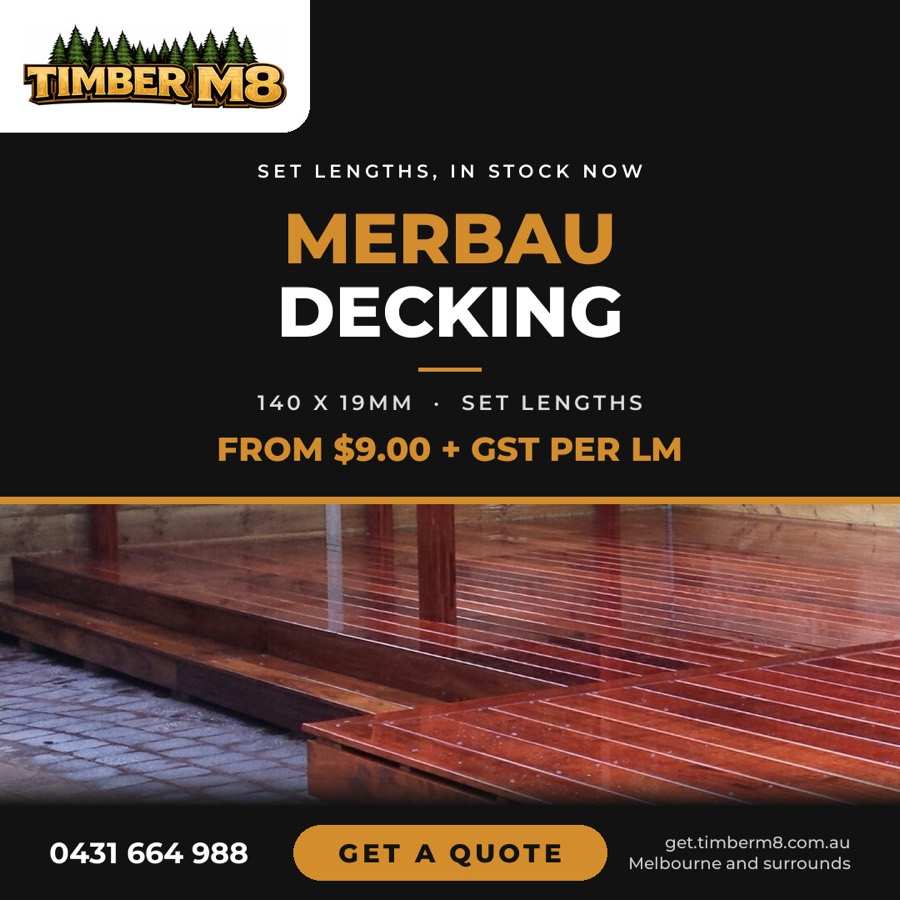
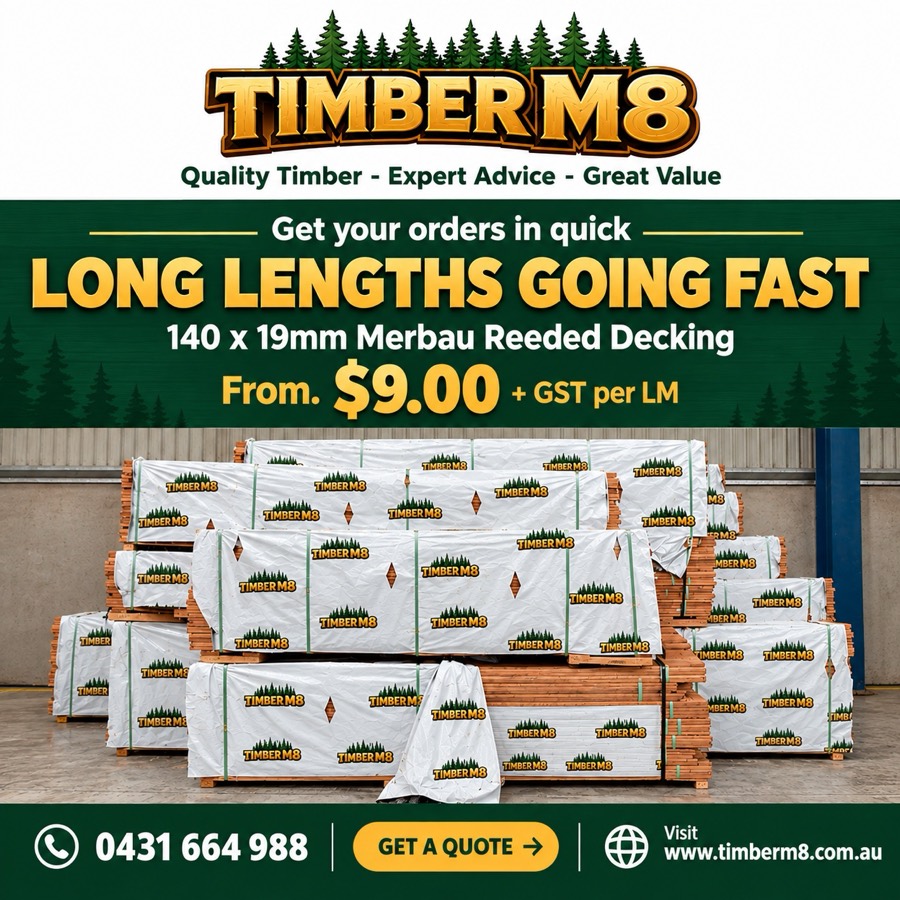
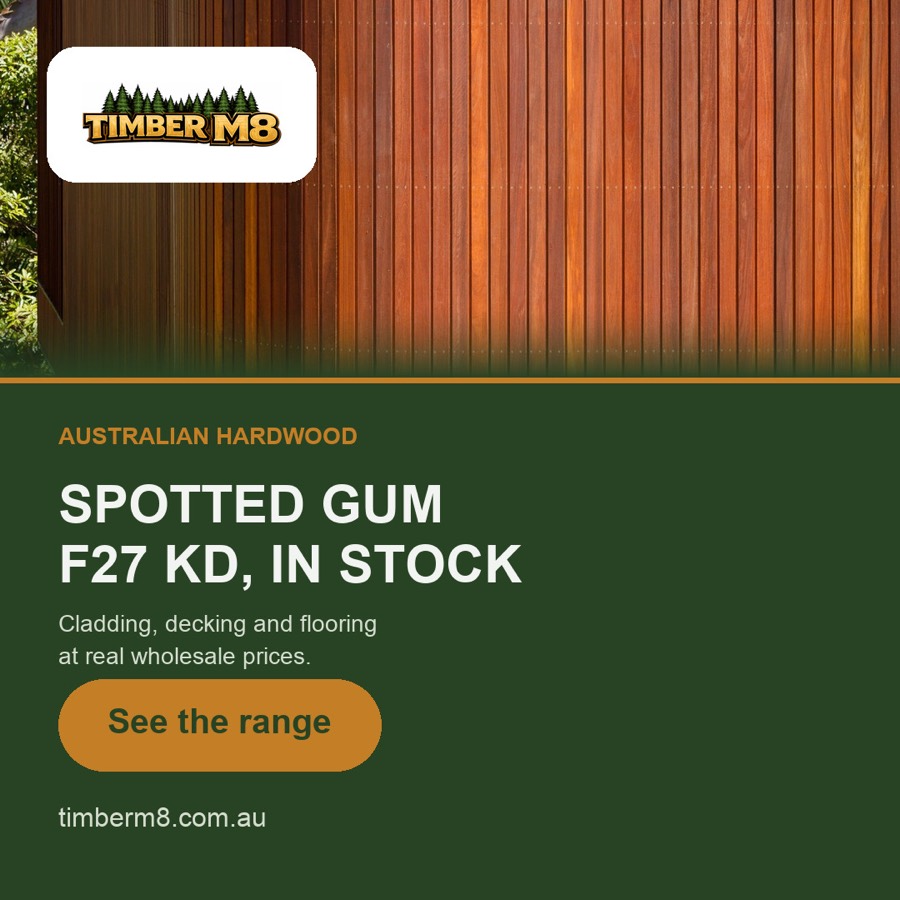
Nobody buys a pallet of Merbau off a Facebook ad. They will send you their list. So the creative sold the thing the business actually does differently — published prices and a same-day quote from the owner — rather than the timber itself. Twelve creatives were built across three directions, each one on the client's own job photography.


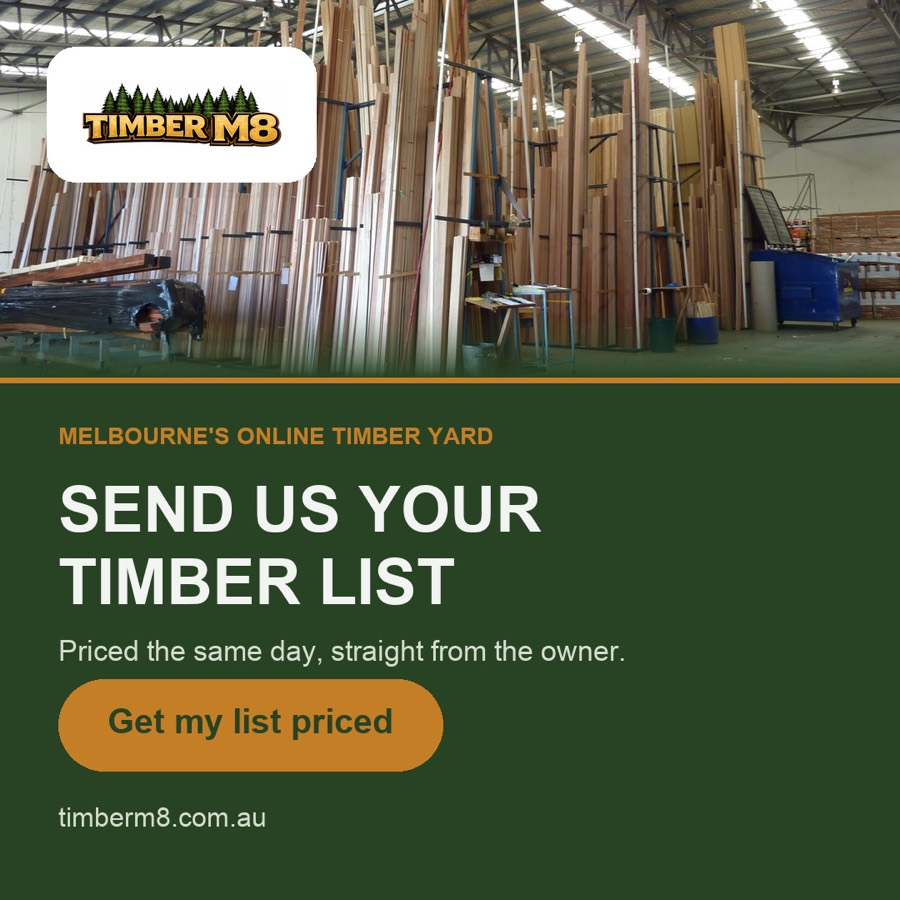
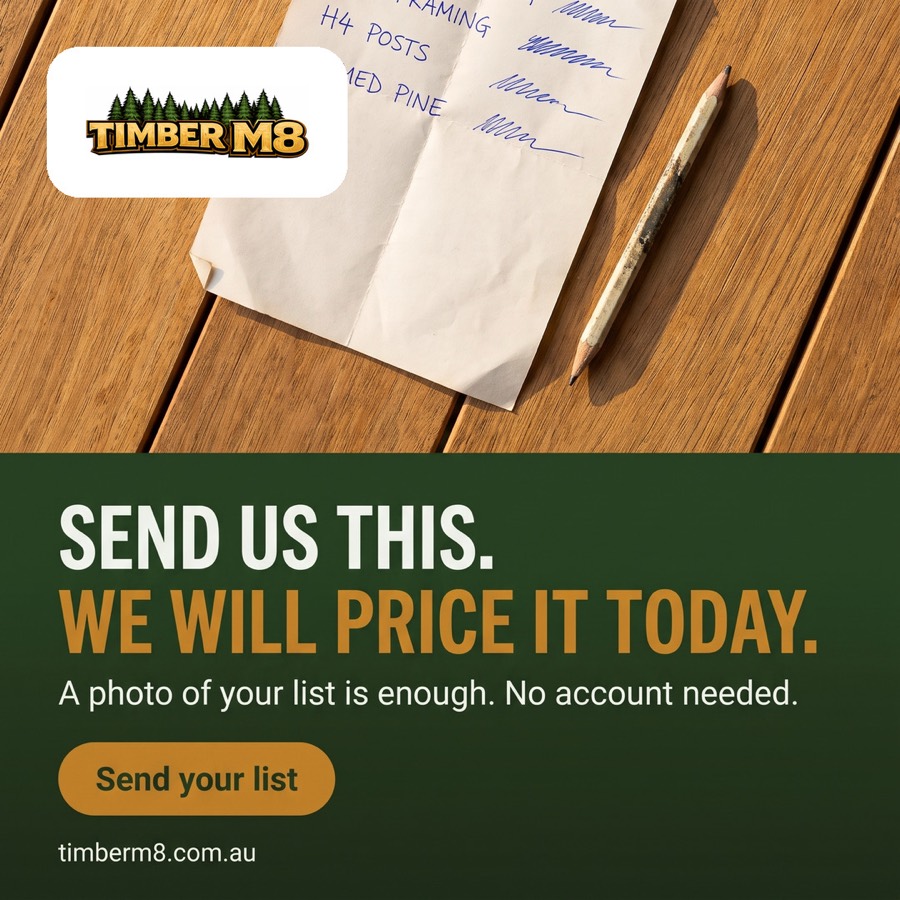
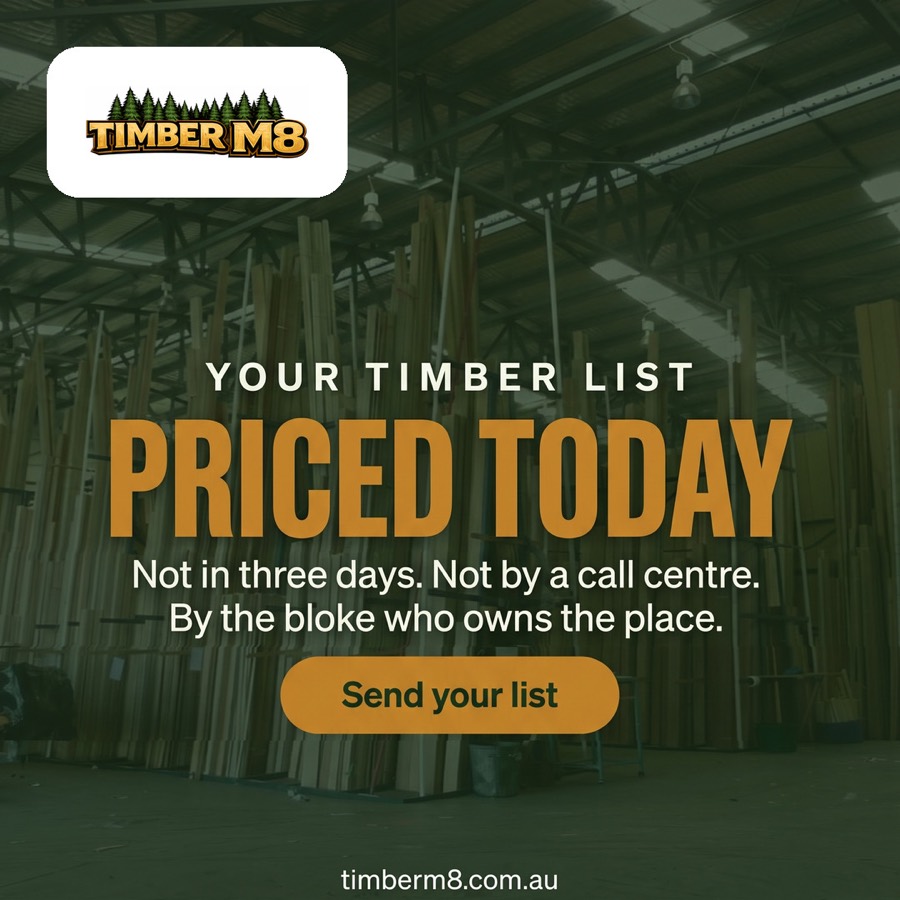
The winning ad carried no price and no product. "Your timber list, priced today. Not in three days. Not by a call centre. By the bloke who owns the place." It pulled the highest click-through rate in the account at 2.92 percent and the lowest cost per lead at $34.77. Our creative ran on 27 percent of the budget and produced 44 percent of the leads, at $35.08 a lead against $74.55 for everything else in the account.

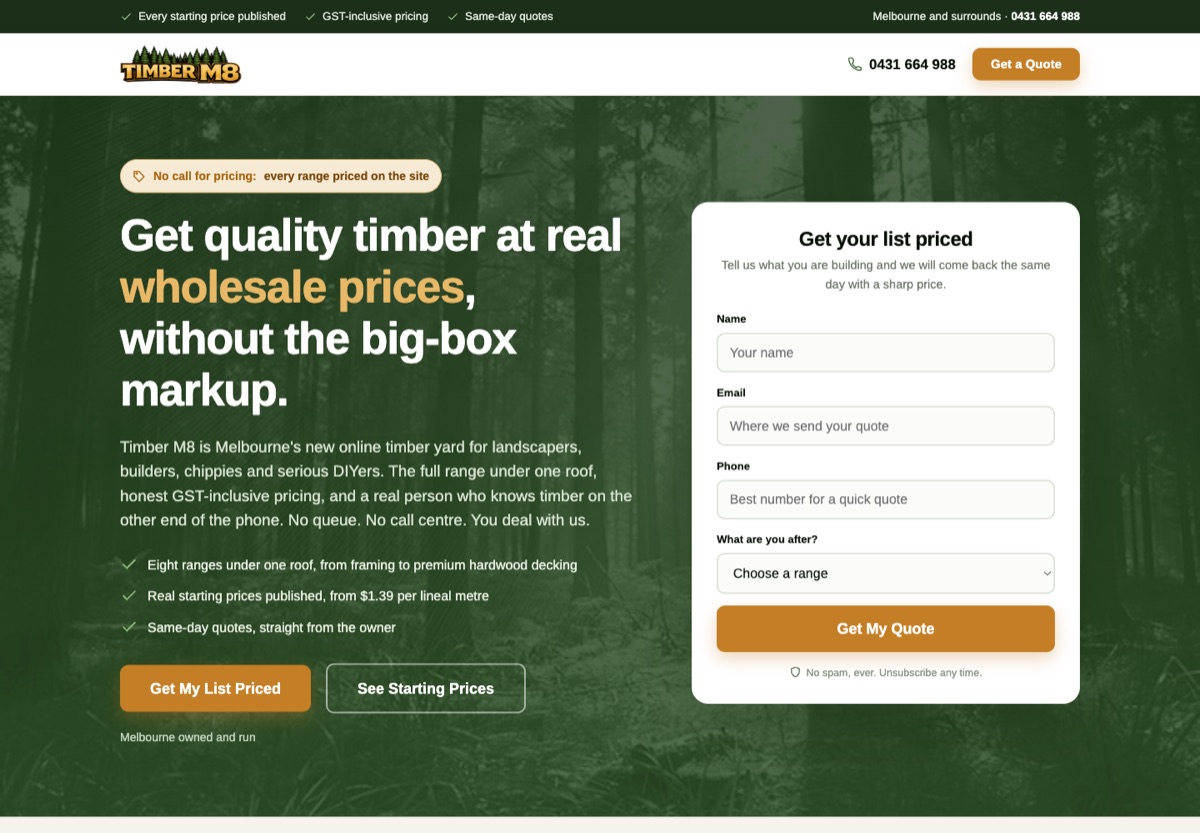
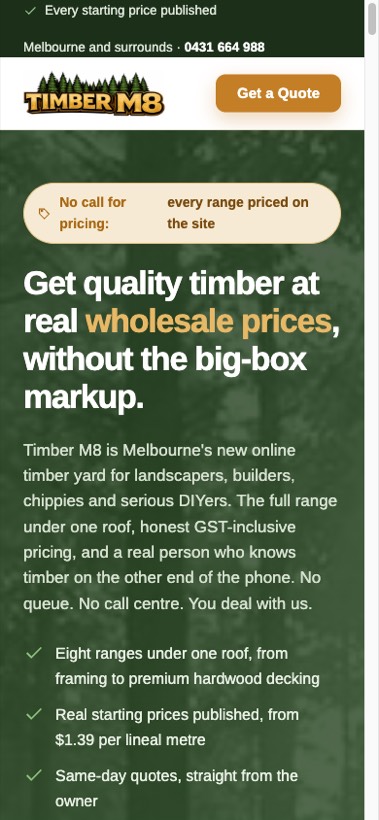
Ads point at a page we built and control, not the shop homepage. Eight ranges with their real starting prices in the open, two forms, and every submission writing straight into the CRM with the range the lead picked and the channel that sent them.
From $1.39 a lineal metre for pine mouldings to $25.36 for laminated posts. No "call for pricing", no bait number to get you on the phone. The hero form asks what range you are after; a second form at the bottom catches the people who read the price list first. Both require an email and a phone number, so every lead arrives with a way to call them back.


A lead arriving with a Facebook click ID is tagged to paid social automatically, so Meta and Google cohorts stay separable without anyone tagging by hand. The range picker writes the job type onto the contact before the owner picks up the phone. The conversion pixel fires on the thank-you page only, gated so refreshes and direct hits cannot inflate the count. Result: 47 contacts, 44 of them through the page we built, 40 of those attributable to Meta — a second independent record that agrees with what the ad platform reported.
Nine weeks, one campaign, $2,565.33. A business with no reviews and no recall now has a repeatable channel, a tracked funnel, and a creative angle proven at $34.77 a lead.


"Automation is not strategy. The machine will happily spend your budget badly."
The same account ran two things side by side. Our creative, built on a real angle, delivered leads at $34.77. Meta's automated product ads, pulling images straight off the Shopify catalogue, took a near-identical share of the budget and delivered two leads at $350 apiece. Same audience, same money, ten times the cost. The lesson is not that automation is useless — it is that nothing replaces knowing what your customer actually wants to hear. For a timber yard with no reviews, that was never a product photo. It was a promise to price their list today.
30-minute audit + strategy call. You'll leave with a custom roadmap — whether we work together or not. No pitch deck, no pressure.
Book your free strategy session →